What Shingle Roofing Work Involves
An asphalt shingle roof is a layered system, not just the shingles you see from the street. Each layer does one job, and when one fails the layers above it start to erode faster.
On a Denver home the stack usually runs decking, then synthetic underlayment or roofing felt, then the ice-and-water shield at the eave, then the field shingles, with metal closing every edge and penetration.
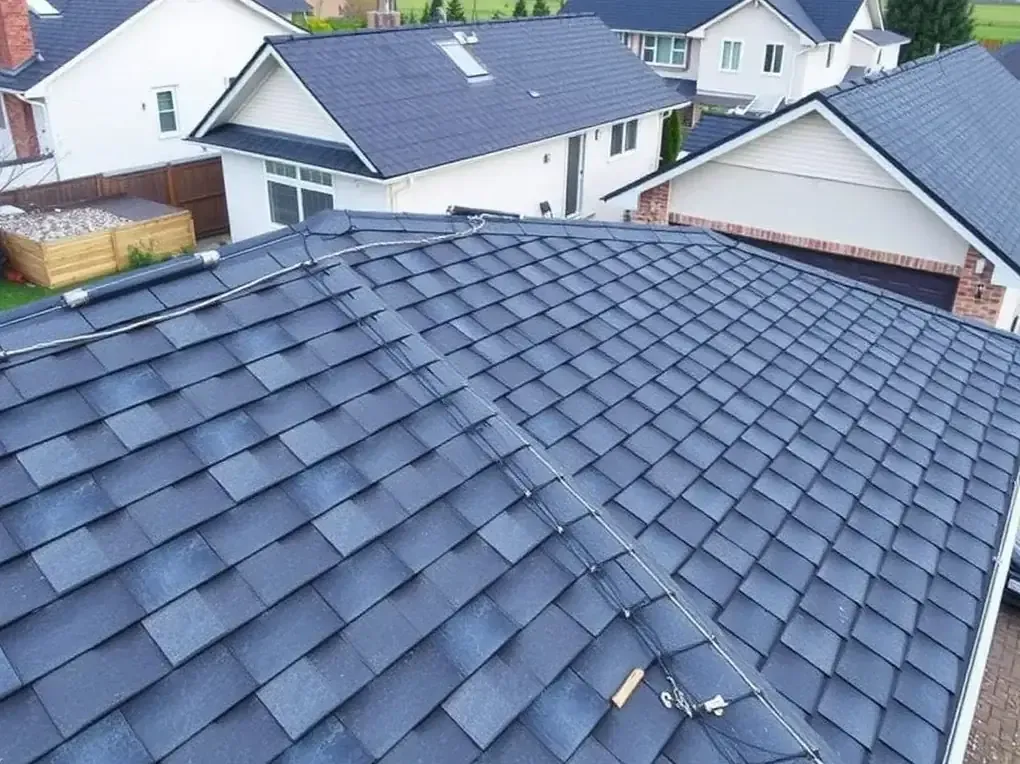
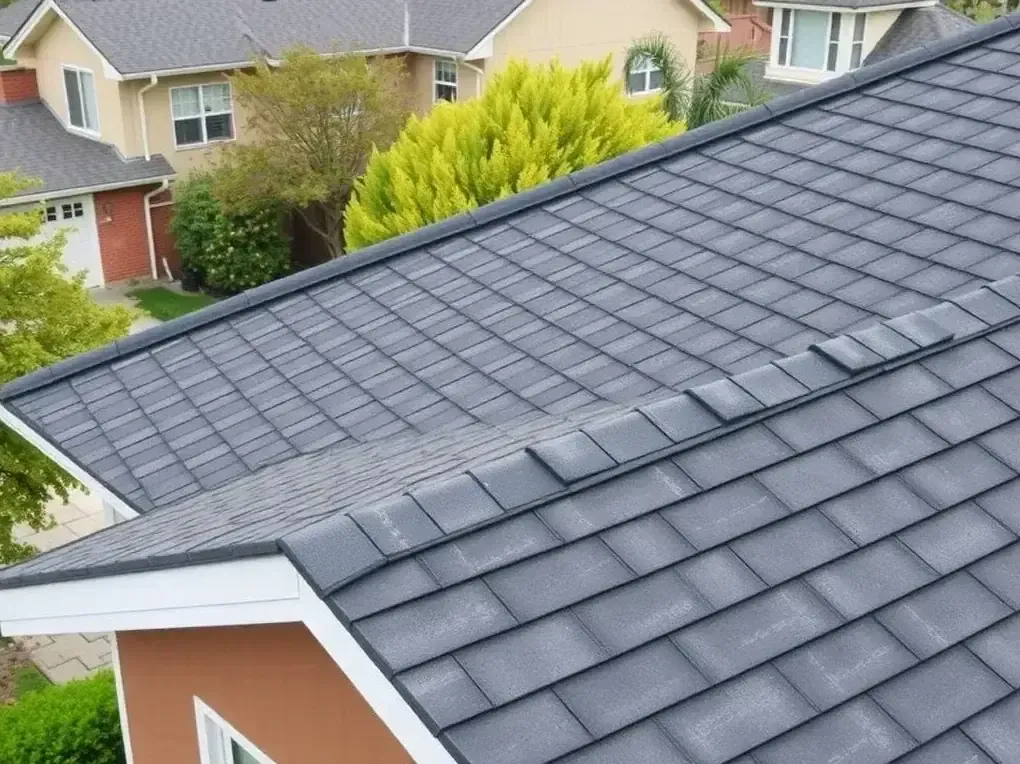
- Architectural shingles are the laminated, dimensional product most Front Range homes get, built on a fiberglass mat and surfaced with granulated asphalt that resists UV at altitude.
- Three-tab shingles cost less per square and sit lighter on older rafters, but they carry a lower wind rating and show granule loss sooner.
- Designer shingles reproduce wood shake, cedar shake, slate, and clay tile profiles for historic homes around Capitol Hill and Baker, at far less weight than concrete tile.
- GAF Timberline HDZ, Owens Corning Duration, and CertainTeed Landmark Pro are the architectural lines we quote most, and each publishes its own algae-resistance and wind-uplift data.
- Drip edge caps the rake and eave so runoff clears the fascia instead of wicking into the sheathing.
- Ridge cap covers the peak, and a ridge vent along that same line exhausts attic heat that would otherwise bake the insulation.
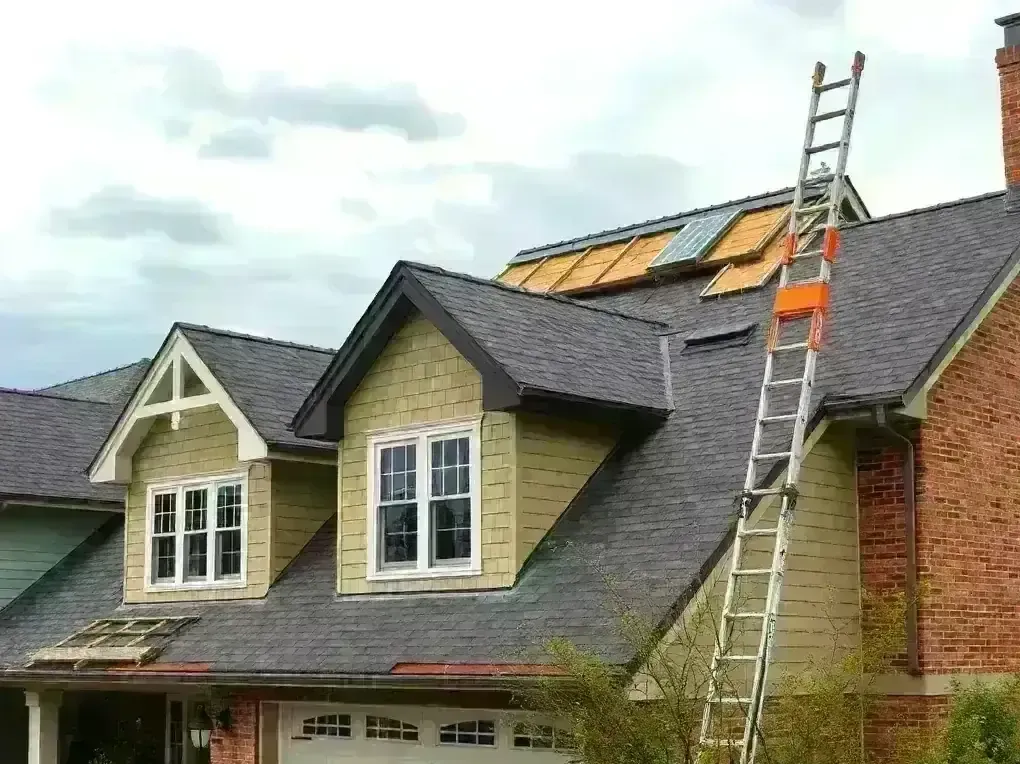
- Step flashing and counter-flashing seal where a roof plane meets a dormer wall, and chimney flashing does the same work at the chimney.
- Pipe flashing, a pipe boot, and boot flashing seal around plumbing stacks and vent pipes.
- Valley metal carries concentrated runoff where two planes meet, and apron flashing closes the low edge of a skylight.
- Ring-shank nails hold shingles against wind uplift, and the starter course plus field course go down in staggered courses so no two joints line up.
Signs Your Shingles Have Reached End-of-Life Wear
Shingles fail in stages, and the symptoms show up long before water reaches your ceiling. Catching the problem at the granule-loss stage usually saves the decking.
- Granules collect in the gutter and at the bottom of the downspout after rain, which means the asphalt surface is eroding.
- Shingle edges curl or buckle on south-facing slopes, where UV at Denver's elevation does the most damage.
- Bruised or dimpled shingles after a hailstorm look fine from the ground but crack through the mat at the next freeze.
- Ice dam back-up at the eave pushes meltwater under the courses and stains the soffit or the ceiling below.
- Daylight shows through the roof deck from inside the attic, and the sheathing feels soft where water has seeped and started to rot.
- Ridge sag and dips along the roofline point to rafters or a ridge beam that have settled, not simply to worn shingles.
Our Shingle Roofing Process, Step by Step
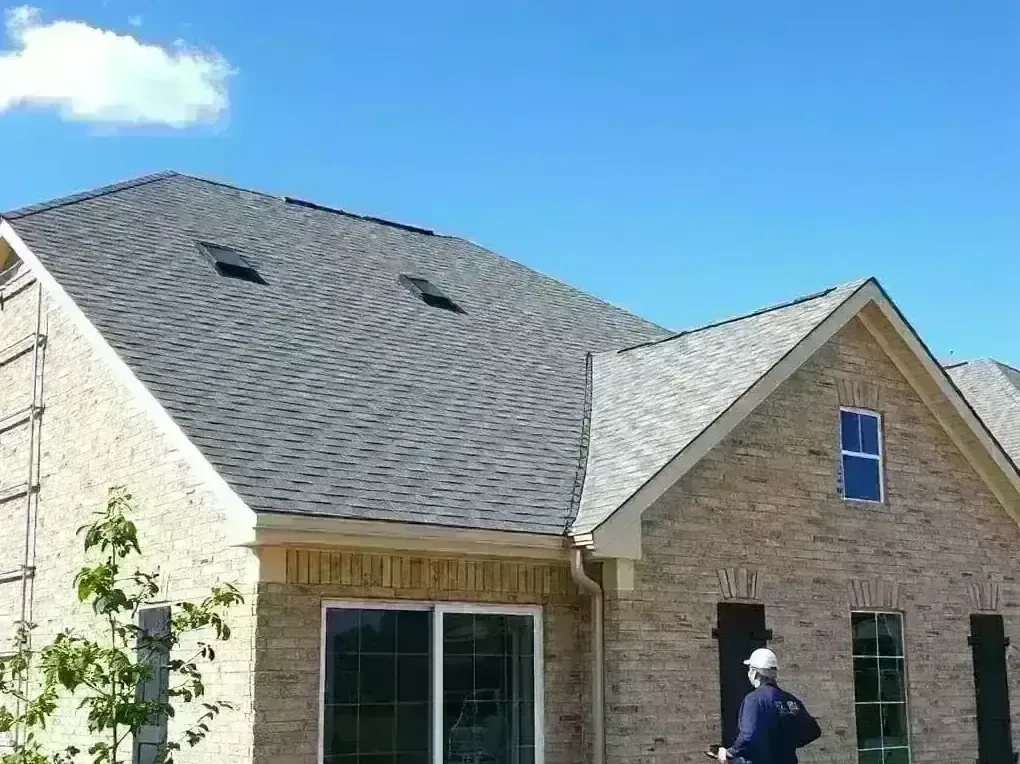
Every job starts with a roof inspection from the deck up rather than a guess from the curb. We walk the rooftop, check the attic, and photograph each problem before we price anything.
- We inspect the field, the valleys, the hip and gable ends, and the verge, then look for spalling brick and failed counter-flashing at the chimney.
- We set scaffold and ladder access, and every crew member ties off to an anchor with a safety harness before the first shingle moves.
- We tear off the old material with a roofing shovel and pry bar, drop it in a dumpster, and sweep the lawn for debris and bent nails.
- We check the roof deck board by board, replace rotted plywood or OSB, and refasten new panels to the joist and truss below with properly sized screws.
- We lay the ice-and-water shield at the eaves and valleys, roll out synthetic underlayment, and set new drip edge on the rake and eave.
- We set the starter course, run field courses in staggered rows, and cap the ridge with hand-sealed nails and sealant.
- We reattach any loose gutter and downspout, then walk the property with you before the air compressor and nail gun go back in the truck.
What Shingle Roofing Costs in Denver
Residential roofing is priced per roofing square, the ten-foot-by-ten-foot unit the trade uses. Most full replacements we quote land between roughly $500 and $900 per square installed, and a straightforward repair often falls between $400 and $1,500.
- Roof pitch drives labor, since a steep mansard or gambrel takes longer and needs more scaffold than a low-slope gable.
- Layers to remove matter, because a tear-off costs more than an overlay or recover on a sound roof.
- Decking replacement adds a per-sheet cost for plywood or OSB, and rot usually shows up around the chimney and eave first.
- Ice-and-water shield, ridge vent, and drip edge are separate line items, so you can see exactly what each one adds.
- Access changes the number, because a narrow alley or a finished landscape bed means more labor moving material and hauling debris.
Warranties, Insurance Claims, and Colorado Building Code
Colorado building code requires a permit when a re-roof covers more than a quarter of the roof area, and an inspection follows. We pull the permit and meet the inspector on site.
Manufacturer warranties on the architectural lines we install cover the shingle itself, not the installation. Our workmanship coverage is written separately and stays with the job. A licensed and insured roofing contractor should show you the decking before asking for a deposit.
- Our roof estimate is line-itemed, so material, labor, permit, and dump fees each appear separately.
- For storm damage or hail damage repair, we note the storm date, photograph bruised shingles, and can meet your adjuster on the roof.
- We provide insurance claim assistance from the first inspection through the supplemental claim and proof of loss form.
- If a carrier denies the claim, we say so plainly and quote a cash repair instead of arguing the point.
Other Roof Systems We Work On
Shingles cover most homes here, but the same crew handles commercial roofing, flat roofing, and metal work. Knowing all three keeps us sharper on shingle detailing.
- Flat roofing on garages and additions uses a TPO or EPDM membrane, and a PVC membrane where grease or chemicals are present.
- Built-up roof and modified bitumen assemblies still cover plenty of older buildings, and both can take a coating instead of a tear-off.
- Metal roofing ranges from a standing-seam panel with hidden fasteners to a corrugated panel with exposed fasteners, and each has its own snow-shed profile.
- Wood shake and cedar shake need gentler handling, and we tell you when restoration is realistic and when it is not.
- Parapet walls, coping, and a scupper drain get detailed on their own, since they fail at the joints rather than in the field.
Ventilation, Insulation, and Long-Term Roof Maintenance
Half of what shortens a shingle roof's life happens underneath it. Attic ventilation, insulation depth, and vapor barrier placement decide how much heat and moisture sit against the decking all winter.
- A soffit vent and a ridge vent work as a pair, intake low at the eave and exhaust high at the ridge, with an attic fan only where that path is blocked.
- Snow guard installation above a doorway protects people from sliding sheets, and some metal systems require it.
- We use moisture meters and infrared imaging on larger sections to find wet substrate before we ever quote a number.
- A coating or an adhesive repair can buy a granulated surface a few more seasons, though it will not fix a cracked mat.
- Tear-off debris and old shingles are recyclable at some facilities, and a rebuild is the moment to add insulation for real energy efficiency.
A Short Glossary of What Our Crew Says
- Purlin, batten, and counterbatten describe the framing and strip layers some tile and metal systems sit on.
- Mastic and roof cement are thick, troweled sealants for small details, while caulk is the thinner gun-applied product.
- Waterproofing stops water at one detail, while weatherproofing is the whole assembly shedding water.
- An overhang shields the wall, and a canopy or awning has to be flashed at the wall rather than sealed with caulk alone.
- Ice dam removal calls for steam ice melting rather than a hammer, because chipping cracks shingles and sheathing.
What Homeowners Tell Us After the Job
We ask every homeowner for feedback once the final walk-through is done, and three things come up more than anything else.
- Customers notice the cleanup first, especially the magnetic sweep that clears nails from the lawn, the driveway, and the plant beds.
- Customers appreciate the photo record, since it shows the decking condition and the flashing work that disappears once shingles go on.
- Customers mention that the estimate held, because the line items we quote are the line items we bill.
Signs You Need Shingle Roofing
Shingles Missing After Wind
Front Range chinook gusts peel the seal strip on the rake and ridge long before the rest of the roof lets go. Missing tabs at the perimeter are the first thing we look for during a rooftop inspection.
Bruised or Dimpled Shingles After Hail
Marble-sized hail bruises the mat under the granule surface, and the damage is nearly invisible from the driveway. We photograph every strike mark so your adjuster has something concrete to review.
Granules Collecting in the Gutters
Grit at the bottom of the downspout after a storm means the asphalt surface is eroding and the fiberglass mat is exposed. That is end-of-life wear, and a patch will not hold it long.
Water Stains on Interior Ceilings
Brown rings on drywall usually mean water has been seeping along the decking for weeks before it found a path inside. Tracing it back to the real entry point matters more than sealing the stain.
Curling and Buckling from Thermal Cycling
Denver swings from the sixties to below freezing in a single day, and that expansion curls shingle edges on south-facing slopes. Curled tabs break their seal and stop shedding water.
Ice Dam Back-Up at the Eaves
Sudden temperature swings cause ice dams that push meltwater backward under the courses at the eave. An ice-and-water shield plus better attic insulation is the permanent fix, not a hammer.
What's Included
- ✓ A free roof inspection with photos taken from the deck, the attic, and every flashing detail.
- ✓ A written photo damage report you can hand straight to your insurance adjuster.
- ✓ Manufacturer warranty registration filed on your behalf for the shingle line we install.
- ✓ Permit pull and inspection scheduling under Colorado building code.
- ✓ Dump fees and full debris haul-off in the dumpster, plus a magnetic nail sweep of the lawn and driveway.
- ✓ New synthetic underlayment, drip edge, and ice-and-water shield included in every full replacement quote.
- ✓ A written workmanship warranty kept separate from the manufacturer's material coverage.
Related Services
Ready to get started? Call us today at 7207840657 for a free estimate.
☎ Call 7207840657